
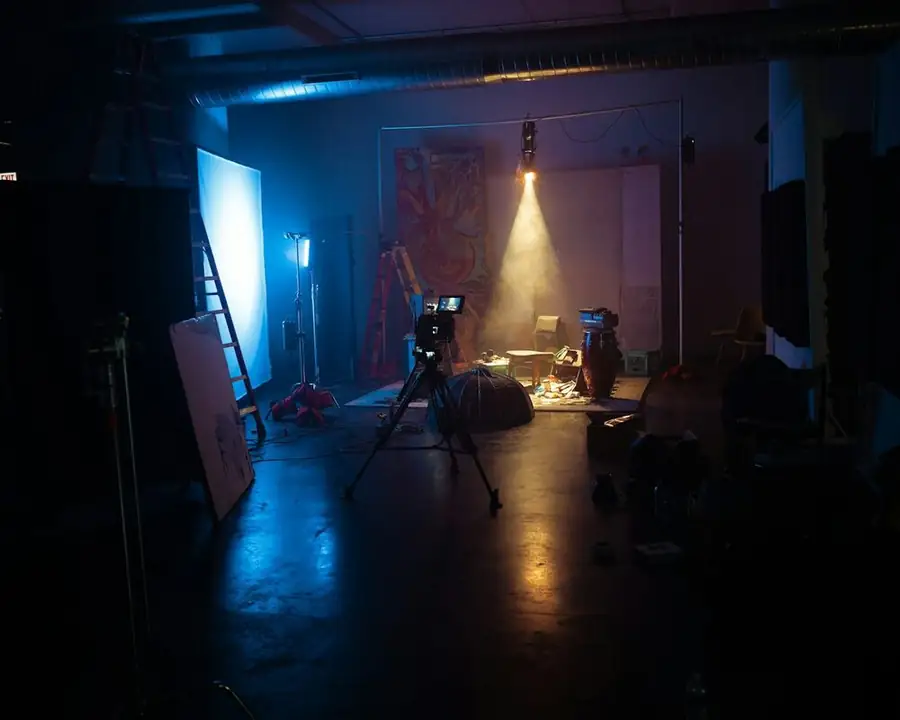
Recording Sets
Recording sets turns memory into evidence.
Record for review
A phone or small camera can capture timing, wording, pauses, and audience response well enough for study.
Follow venue and audience recording policies.
Record enough to learn, then actually review it.
Video Recording
Video reveals physical habits, eye line, stage movement, framing, and audience context.
Frame the body
A camera that cuts off hands or loses you every time you move cannot evaluate physical performance.
Choose a position that sees the usable stage.
Video is only as useful as the picture and sound together.
Camera Placement
Camera placement changes whether the performance feels intimate, flat, distracting, or cinematic.
Protect sightlines
A camera cannot replace a paying customer's view without agreement. Use center-rear, side, balcony, or house positions appropriate to the room.
Tripods need safe placement.
The best camera position captures the act without becoming part of the act.
Audience Audio
Laughter is part of the performance record.
Do not fake the room
Audience microphones should capture response, not manufacture it. Excessive sweetening can damage trust and timing.
A real laugh is useful data.
If the audience matters to the live show, it matters to the recording.