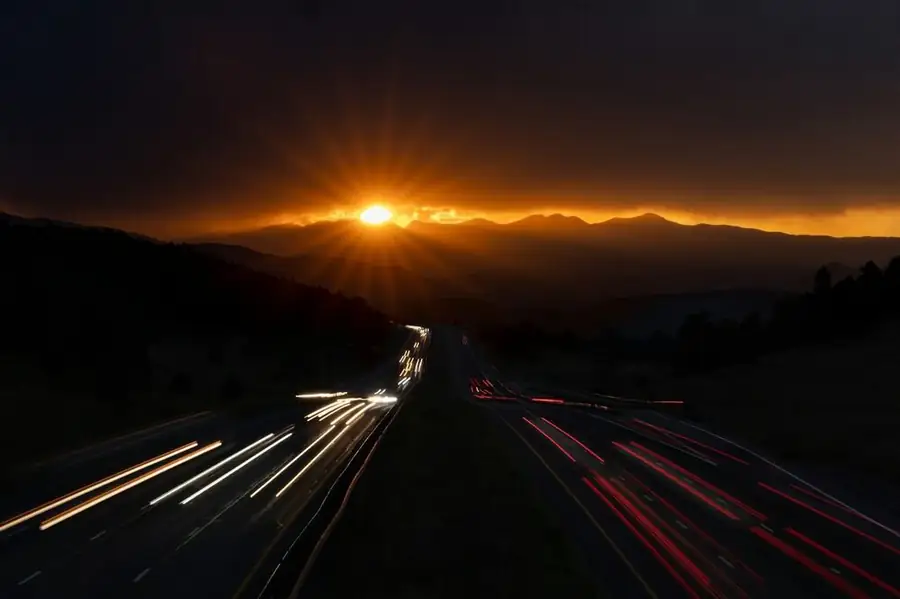
On the road at sunset: headlight and taillight streaks on a highway running toward the hills
On the Road

A comedian's road trip emergency kit, and the drive home.

The gig is two hours out and the show ends at midnight. This is the road trip emergency kit a comedian keeps in the trunk, as a list you can tick off while you pack, then the checks before a run, what to do on the shoulder, who comes and gets you across state lines — the van, the trailer and the bus included — and the drive home after the show. Life on the road is mostly the drive, so plan it like the set.

The kit

What rides in the trunk

Pack it once, before the first run, and look at it every month. Tick what is already in the car — the ticks stay in this browser, on this device, and nowhere else. Every "Find one" is a search, so it shows what is on sale today rather than a product that went away.

0 of 0 packed
On the shoulderSo the next car sees you in time.
  • Set out behind the car, spaced back toward the traffic — the pattern truckers must use is under Broke down. Find one →
  • Battery lights: no flame, so nothing to catch fire. Ready.gov puts flares or a triangle in every car. Find one →
  • A driver watching for a stopped car is not watching for a person in black. Find one →
  • Both hands free for the jack, at one in the morning. Find one →
Getting it movingA flat or a dead battery should not end the night.
  • A pack needs no second car — keep it charged. Ready.gov lists the cables. Find one →
  • It plugs into the power socket and keeps a slow leak going to the next town. Find one →
  • Fill to the number on the label in the driver's door, not the one on the tire (NHTSA). Find one →
  • Know where they are and that the spare holds air. A spare ages even when it is never used. Find one →
  • For the hose that lets go and the bumper hanging off. Find one →
If you are there a whileBetween towns, help can be a long way off.
  • A gallon of water, and something that keeps. Find one →
  • Wool, or a foil emergency blanket. Ready.gov puts one in every car. Find one →
  • The phone is your tow, your map and your ride to the gig. Ready.gov lists the charger. Find one →
  • No signal, no map app. Ready.gov lists a map. Find one →
  • For the one station, tow truck or diner that will not take a card.
First aidFor a cut hand at load-in. A crash is 911.
  • The Red Cross list, cut down: bandages in several sizes, gauze pads and a roller bandage, cloth tape, antiseptic wipes, antibiotic ointment, an instant cold pack, non-latex gloves, tweezers, an emergency blanket and first-aid instructions. Find one →
  • A few days more than the run needs, in the bag you carry in — not in the trunk.
  • For the night the phone is dead. The Red Cross says to keep them in the kit.
  • Replace what gets used and what runs out of date.
Where it snowsAny run into snow country.
  • Ready.gov lists the scraper. Find one →
  • Under the drive wheels when they spin — Ready.gov's own tip, for traction.
  • For the tailpipe as well as the wheels: the Weather Service says clear the exhaust before you run the engine. Find one →
  • The cloth goes on the antenna or a door so rescuers find the car (National Weather Service). Find one →
  • Look up the state's chain rules before the mountains, not at the top. Find one →
In the gloveboxWhat the tow driver, the officer and the rental desk ask for.
  • The VIN is on the registration too — you want it for the recall search (NHTSA).
  • AAA's guide is blunt: no card and matching photo ID, and you pay for the service at commercial rates.
  • If the car is rented, its roadside number is the one you call first.
  • Every room, hotel, booker and phone number on paper. The phone dies; paper does not.
Two camerasOne watching the road, one listening to you.
  • It records the road the whole time you drive, so if anything happens there is a record of what did. Get one that saves the clip by itself on a hard bump. Find one →
  • It faces you. When a bit shows up at 70 miles an hour, say it out loud and keep driving — the camera keeps it, and your hands never leave the wheel for the phone. Find one →
  • The camera records in a loop over its oldest footage. Pull the night's clips off at the hotel, before the loop takes them. Find one →
  • The cabin camera records their voices too, and some states — California, Florida, Illinois and Pennsylvania among them — require everyone's consent to record a conversation.
The phone, set up before you pull outSo it works for you without being in your hand.
  • Directions set before you leave the lot, then leave it alone. NHTSA's line for drivers is never a handheld phone at the wheel. Find one →
  • Save them for use offline before you go; between towns the signal comes and goes.
  • Set so they show on the lock screen, for whoever finds the phone if you cannot answer it.
  • With the one person who has the whole run — the message home is on Before you roll.
Before you roll

The week before the first date

A breakdown you prevent in the driveway costs a morning. The same one at 1 a.m. between towns costs the night, the fee and maybe the next booking.

01
All five tires, cold

Fill to the pressure on the label on the driver's door edge, or in the owner's manual — not the number on the tire. Check them cold, meaning not driven for at least three hours, and check the spare. Tread is finished at 2/32 of an inch: put a penny in the groove with Lincoln's head upside down, and if you can see the top of his head, replace the tire. The last four digits of the code on the sidewall are the week and year it was made; some carmakers and tire makers say replace at six to ten years old, whatever the tread.

02
Under the hood, and every light

Oil, coolant, brake fluid and washer fluid; wipers that clear; every light, with somebody standing behind the car while you brake and signal. If it is due a service, have it done the week before the run, not the day before — a repair needs a few days to show it holds. Then put the plate number or the VIN into NHTSA's recall search, and get anything open fixed before you go.

03
If it is a 15-passenger van

NHTSA's safety advice for a 15-passenger van: a driver who drives one regularly, and no more than eight hours at the wheel in a day. Everybody belted — an unbelted rider is about four times likelier to die in a single-vehicle crash. Fill the seats front to back, and keep riders in front of the rear axle when it is not full. Gear goes forward of the rear axle, and nothing goes on the roof. Tires checked before every trip, the spare too — used vans come with spares many years old. Of the 235 people killed in 15-passenger van rollovers from 2010 to 2019, 57% were thrown from the van.

04
Somebody at home has the whole run

Every room, every hotel, the route, and the time you will text after each show. Share your live location with that one person for the length of the run, and agree what they do if a text does not come. The form below writes the message for you.

The text home

One message: where you are tonight, and what to do if you go quiet

Fill in tonight's run and copy the message to the one person who knows where you are. Nothing is sent from here — what you type stays in this browser so tomorrow's only needs the changes.

Tick it once you have shared your live location with them — only then does the message say so.
The message
Fill in tonight on the left — the message writes itself here.
Broke down

On the shoulder, in this order

Traffic is the danger, not the car. Everything below is about being seen, being out of the way, and getting the right truck to the right place.

01
Get off the road

Signal and get as far right as you can — the shoulder, or better, an exit or a lot. If it still rolls, roll it somewhere safer than the interstate.

02
Hazards on, and be seen

Hazards first. Then the triangles, if you can set them out without walking into traffic. The pattern truckers must use is a good one: one about 10 feet behind the car, one about 100 feet behind, one about 100 feet ahead — and on a divided highway, all three go back toward the traffic, at about 10, 100 and 200 feet. Behind a hill or a curve, the far one goes back as far as 500 feet, where drivers see it in time. Every state has a Move Over law, and some cover any car stopped with its hazards on — plan as if the next driver has never heard of it.

03
In the car, or well away from it

If you can stay in the car, stay buckled and facing forward — especially on a bridge or an overpass, Maryland's highway safety office says. If you get out, use the door away from the traffic, get off the road quickly and wait behind a guardrail, barrier or embankment. Not beside the car, and never between the car and the traffic.

04
Know where you are

The last exit, the mile marker, which way you were heading. Roadside dispatch asks for the exact location and the nearest cross street, and the map app may be guessing.

05
Call the right number

Blocking a lane, hurt, smoke, or somewhere you feel unsafe: 911. Otherwise your roadside cover — the next tab. In a rental, the rental company's roadside line comes first; it is on the agreement.

06
Tell the room

Call the booker the moment you know you will be late, not at showtime. A room can move you down the lineup if it knows at seven. At eight, it cannot.

07
Make the gig anyway

A ride from the shop, a one-way rental from the nearest town, a comic on the bill who lives close. The car can sit at a shop overnight; the gear does not stay in it.

The blowout Do not slam the brakes. Hold the wheel with both hands and keep your speed if it is safe to, then ease off the gas gradually. Steer where you want the car to go. Once it is steady, keep slowing and pull off where it is safe. A front tire pulls at the steering, a rear one you feel in the seat — the steps are the same (NHTSA).
Snowed in Stay with the car — out in wind-driven snow you lose your bearings fast. Run the engine about ten minutes an hour for heat, with a window open a little, and clear the snow off the exhaust pipe first: a blocked pipe fills the car with carbon monoxide. Dome light on at night while the engine runs, a bright cloth on the antenna or a door, and the hood up once the snow stops (National Weather Service).
Coast-to-coast cover

Who comes and gets you, a long way from home

The two plans that answer anywhere in the States, side by side. AAA's terms here are the Automobile Club of Southern California's, as of June 2026; AAA's regional clubs set their own, so check your own club's. Good Sam's are its Platinum RV plan's. Both are as of , and both change: check yours before a tour.

AAA ClassicAAA PlusAAA PremierGood Sam Platinum
Free towUp to 7 miles — or back to the tow company's own yard, however far that isUp to 100 milesOne tow a year up to 200 miles; the rest up to 100To the nearest service center, no matter the distance
Who or what it coversYou — driving or riding, in any carYou — driving or riding, in any carYou — driving or riding, in any carYour household's vehicles, and the ones you rent or lease; spouse and dependent children under 25
Vans, pickups, SUVsYesYesYesYes
Motorhomes and trailersOnly with the optional RV cover — up to $500 a call; commercial trailers excludedThe sameThe sameYes — motorhomes (Class A, B and C), travel and utility trailers
WhereEvery state, through the local AAA club, and Canada through CAAThe sameThe sameThe U.S., Canada, Mexico, Puerto Rico and the U.S. Virgin Islands
Calls a yearFour for the main member, two for each associateThe sameThe sameNot stated on the plan page — ask
StartsNo wait in the guide — the seven-day wait is for Plus, Premier and RVSeven days after you paySeven days after you pay (the 200-mile tow too)Not stated on the plan page — ask

AAA Classic

Free tow
Up to 7 miles — or back to the tow company's own yard, however far that is
Who or what it covers
You — driving or riding, in any car
Vans, pickups, SUVs
Yes
Motorhomes and trailers
Only with the optional RV cover — up to $500 a call; commercial trailers excluded
Where
Every state, through the local AAA club, and Canada through CAA
Calls a year
Four for the main member, two for each associate
Starts
No wait in the guide — the seven-day wait is for Plus, Premier and RV

AAA Plus

Free tow
Up to 100 miles
Who or what it covers
You — driving or riding, in any car
Vans, pickups, SUVs
Yes
Motorhomes and trailers
Only with the optional RV cover — up to $500 a call; commercial trailers excluded
Where
Every state, through the local AAA club, and Canada through CAA
Calls a year
Four for the main member, two for each associate
Starts
Seven days after you pay

AAA Premier

Free tow
One tow a year up to 200 miles; the rest up to 100
Who or what it covers
You — driving or riding, in any car
Vans, pickups, SUVs
Yes
Motorhomes and trailers
Only with the optional RV cover — up to $500 a call; commercial trailers excluded
Where
Every state, through the local AAA club, and Canada through CAA
Calls a year
Four for the main member, two for each associate
Starts
Seven days after you pay (the 200-mile tow too)

Good Sam Platinum

Free tow
To the nearest service center, no matter the distance
Who or what it covers
Your household's vehicles, and the ones you rent or lease; spouse and dependent children under 25
Vans, pickups, SUVs
Yes
Motorhomes and trailers
Yes — motorhomes (Class A, B and C), travel and utility trailers
Where
The U.S., Canada, Mexico, Puerto Rico and the U.S. Virgin Islands
Calls a year
Not stated on the plan page — ask
Starts
Not stated on the plan page — ask
AAA covers you, not the car The card is in your name and works in whatever car you are in — yours, the headliner's, a rental. The service goes to the person named on the card, driving or riding. Carry the card and a photo ID that matches it: without them you pay for the service at commercial rates. Anywhere in the States the local AAA club sends the truck, and in Canada the CAA. The roadside number outside California, in the Southern California club's guide: 1-800-222-4357.
Buy it before the tour, not on the shoulder Plus, Premier and the RV cover start seven days after you pay. A breakdown from before you joined is not covered. And since 1 November 2026 the Southern California club does not let a Classic member move up to Plus or Premier if the household has had a tow in the past 90 days — the long tow has to be bought before you need it.
Seven miles is a town tow Classic tows you seven miles, or back to the tow company's own yard however far that is — fine in a city, no use on an empty stretch of interstate where the nearest shop that can fix the car is 80 miles off. Plus and Premier's long tows reach it. Good Sam pays to take the car to the nearest service center with no mileage limit; its RV Platinum+ plan lets you choose a shop within 100 miles instead.
The van, the trailer, the motorhome AAA's ordinary cover is for cars, pickups, SUVs and vans. A motorhome or a trailer needs its optional RV cover, which pays up to $500 a call, and a trailer counts only if it is carrying recreational equipment — commercial trailers are excluded, and a trailer of gear for paid shows may not count. AAA membership is also sold for personal, non-commercial use, so a van owned by the act's company is a question for the club too. Ask, in writing, before the tour. Good Sam's Platinum plans name motorhomes, travel trailers and utility trailers outright.
The bus A bus is a heavy tow, and a car club's ordinary cover is not built for it. Hire a coach with a driver and the coach company's road service comes with it — and so do the federal limits on the driver: no more than 10 hours at the wheel after 8 hours off, and no driving after 15 hours on duty. Route the tour around the driver's hours, not the other way round. If the act owns a coach registered as a motorhome, ask Good Sam whether it qualifies — its Platinum plans name Class A motorhomes.
What you may already have Before you buy anything, look at what you have: roadside cover on your auto policy, the carmaker's own roadside on a newer car, the benefits of a credit card, the number on a rental agreement. They are not all equal — find the tow distance on each, and what it does with a trailer.
The drive home

After the show, and the weather

The set is the easy part of a road gig. The drive back is the part with the numbers against it.

The drive home is the dangerous part NHTSA says drowsy-driving crashes happen most between midnight and 6 a.m., often a lone driver running off the road with no sign of braking, on rural roads and highways — the drive home from a road gig, to the letter. It counted 644 deaths in drowsy-driving crashes in 2024, and says the real toll is hard to pin down and likely higher. Coffee alone is not enough: a tired driver can have "micro sleeps" of four or five seconds, and at 55 miles an hour that is more than 100 yards asleep. If you are fading: one or two cups of coffee, then a 20-minute nap somewhere safe, like a lighted rest stop.
Put the room in the deal If the show ends late and the drive back is long, ask for a hotel room as part of the booking — or budget one. It is the cheapest safety gear on this page. Drinks after the set go with the room, not the drive: NHTSA says alcohol and sleepiness together make it worse. And split the long days — NHTSA's line for a van driver is eight hours at the wheel.
Weather on the route Check the whole route's forecast the night before, not just the town's. Six inches of water can make a car lose control, Ready.gov says — do not drive into a flooded road; turn around. Cruise control off on slippery or icy roads. In snow, the kit on the first tab, and "Snowed in" under Broke down.
Alone out there

Alone on the road, day and night

For anyone on the road alone — and for the things women on the road deal with more often. None of it is about being scared; all of it is about somebody knowing where you are.

One person knows the whole run Live location shared with them for the length of the run. A text after every show by an agreed time — and what they do if it does not come: call the room first, then the police in that town. The message home is on Before you roll.
Post the town after you have left it Tagging the club at 8 tells everybody where you will be walking to your car at 11. Post the photo tomorrow, from the next town. Same for the hotel: never in a post, not even the lobby.
An unmarked car behind you Nashville's police tell drivers: put your hazards on to show you have seen it and mean to stop, then drive safely — no sudden moves — to the nearest public place or a police station, somewhere well lit at night, and call 911 to ask the dispatcher to confirm it is an officer. Roll the window down only enough to talk and pass papers, stay in the car until told otherwise, and ask to see a photo ID and a badge.
The walk to the car Ask the door person or another comic to walk out with you — it is a small ask at the end of a night. Keys in your hand before you reach the door, not at the car. Look at the back seat before you get in, and lock the doors the moment you are in, before you start the engine.
A car that follows you Do not lead it to the hotel, and do not stop somewhere empty. Drive to a police or fire station, or somewhere bright and busy, and call 911 on the way — say where you are and which way you are heading.
Fuel, parking, the motel Fuel at the big, lit station before dark, and never let it drop under half a tank at night. Park under a light, near the door, nose out. At the motel ask for a room off the ground floor, with the number written down rather than said out loud — Working a Room has the whole list to ask for.
The rest of the road

Past the emergency kit

The kit and the checks keep a bad night from becoming a lost one. The rest of a road trip to a gig is worked through on these pages.

Roadside assistance plans change their terms, and AAA's benefits differ from club to club, so check your own plan before a tour. Last checked .