



























Podcast Markets 2027
The podcast market from the comic’s side: where a show finds listeners, who pays and for what, and the numbers to check first.
Find listeners. Choose outlets. Build an offer people will pay for.
An independent guide from D.O.C. for comics. D.O.C. is not affiliated with or endorsed by SiriusXM or any platform named here.


Podcast markets: the short version
A podcast market is any place where your show finds listeners, buyers or both. Listening apps help people hear you. Sponsors, fans and platform programs pay under their own terms. A free D.O.C. listing helps people find you. Choose the job your show does for your career, publish from one reliable home, add the listening apps, then add one paid offer you can deliver.
Making the show itself is in The Comedy Podcast Playbook. This guide covers what comes next: where the show goes, and who pays for what.
The podcast market terms on this page come from each platform’s own pages, as of 8 October 2026, and are dated where they appear. The money examples are arithmetic, not forecasts; the plans and pitches are D.O.C.’s guidance, not platform rules.
In this guide to podcast markets
- 01What a podcast market is
- 02Keep your audience through a change
- 03A show someone can describe
- 04The podcast market map
- 05The free publishing route
- 06Get into the listening apps
- 07YouTube
- 08Who pays, and what they buy
- 09Platform pay
- 10Memberships
- 11Sponsors
- 12Networks and paid work
- 13Charts
- 14Study strong shows
- 15Your free D.O.C. listing
- 16Festivals and local audiences
- 17The money worksheet
- 18Your first 30 days
- 19Plan for 2027
- ?Questions
- ↗Sources
What a podcast market is
A podcast market is a place where your show finds listeners, buyers or both, and those are different jobs. A listening app can put your show in front of people without paying you. A sponsor can pay for a message without hosting anything. A membership service collects money from fans who already know you.
So start with the job the show does for your career. It might help the fans you have keep up, bring people to live shows, build a paying fan club, or become a business of its own. A newer comic needs a show strangers can find and recommend. A touring comic may want one that keeps fans close between visits. A comic with a loyal following may be ready for a small paid extra. No show needs the whole podcast market at once.
Five roles, kept apart. The host stores and serves your files. A listening platform plays them. A discovery outlet helps people find them. A payment service collects money. A buyer pays for an ad, an appearance, production work or rights. One company can fill several roles, and the terms differ from role to role.
Pick the audience and the job first. Pick the platform second.
Keep your audience through a change
A radio outlet, a regular stage or an industry deal can change, and a familiar route to your fans changes with it. A podcast gives people another way to hear you now. Treat it as a new road to your audience; the money comes from the offers later in this guide.
Give fans one useful next step: a single page with your name, a line about the show, a good first episode, your current listening links and your official live dates. Someone who remembers your voice can then find the right show in seconds.
Keep the message about access: “Let your audience hear you now. Start a show, share the one you have, or give fans a new place to follow you.” Promise a way to listen, and let a paid offer speak for itself when you have one.
Keep your original files, descriptions, artwork and contact list, and keep the accounts in your own name. A new outlet works best as one more route to your audience, beside the list you own: building an email list as a comedian shows how to start one.

A show someone can describe
“Two comics talking” describes a recording setup, not a reason to listen. A clear idea gives people something to repeat to a friend. Try this sentence: “This is a show for ___ who want ___, with ___ every episode.” A road comic might tell the story behind one town and one gig. An interview host might ask guests about the worst advice they ever followed.
Test the promise across six episode ideas. If they lean on famous guests you can’t reach, build the format on access you have. If they all sound alike, add one repeatable change: a listener question, a new setting, or a guest with a useful story. Label the show honestly (clean, explicit, personal, political or family-friendly), so listeners can choose and sponsors can judge the fit.
Record a pilot before you pay for a logo, and ask a few people what the show is about. If they can’t say, sharpen the opening and the promise. The Playbook’s “Shape the show” has formats, names and pilot lengths.
The podcast market map
Use this map to avoid paying for the wrong job. It shows useful routes, not a ranking, and it doesn’t try to name the whole podcast market.
| Market | Main job | How the money works | First move |
|---|---|---|---|
| Spotify for Creators | Free hosting and distribution, with Spotify’s own tools | Hosting is free; the Partner Program pays shows that qualify | Publish or connect your show, then read the Monetize page |
| Apple Podcasts | Listening, discovery and optional paid subscriptions | A free listing is separate from selling subscriptions | Add or claim your feed in Apple Podcasts Connect |
| YouTube and YouTube Music | Video, clips and podcast discovery | Uploading is separate from Partner Program acceptance | Make a podcast playlist, or connect your RSS feed where it’s offered |
| Amazon Music | More listeners, and stats on how they listen | A listing, not a commission | Add or claim your show at Amazon Music for Podcasters |
| iHeartRadio | Another listening directory | A listing, not a network deal | Submit at iHeart’s podcaster site or through a partner host |
| Pocket Casts | A podcast app with open submission | A listing, with a share link | Submit your feed and keep the share link |
| Patreon | Memberships and direct fan payments | A platform fee and payment processing on what fans pay | Offer one benefit you can deliver steadily |
| Acast | Hosting, distribution and advertising | Its free plan has limits, with more episodes tied to its ad marketplace | Compare the current plans before you move |
| Direct sponsors | A buyer for a relevant audience | A negotiated deal, not automatic platform pay | Pitch the fit and a measurable deliverable |
| D.O.C. | Comic-first discovery | Free; fans support you on your own channels | Build your free listing |
Start with one reliable publishing home. Add listening apps once you’ve checked they point to the right show, and add a paid offer when you have something worth buying.
The free publishing route
Hosting is the cheapest way into the podcast market. Spotify for Creators offers free, unlimited podcast hosting, with distribution to other podcast apps, as its own page describes it. That covers publishing without a hosting bill; production, approval by the apps and income are separate questions.
Already have a host that works? Keep it. You don’t need to move to get a D.O.C. listing, and Spotify’s page invites shows hosted elsewhere to keep their current hosting too. Moving brings redirects, link checks and an archive review, so move for a reason.
Before you choose any host, find out how to export your files, redirect the feed, keep the archive and cancel, and read the limits of the exact plan. Acast’s free Starter plan, for example, lists one show and five episodes, with unlimited episodes when you make the show available in Acast’s advertising marketplace (its pricing page, 8 October 2026). Acast also says it will redirect your feed if you move on.
Keep your own copy of the finished files. A host delivers your episodes; your own drive is the archive. Step by step: the Playbook’s publishing guide.
Get into the listening apps
Listening apps are the podcast markets where people press play. Apple Podcasts takes shows by RSS feed from your host, or through its own Apple Podcasters Program. In Apple Podcasts Connect you add the feed, check the show’s details, choose countries or regions and publish. Apple says shows must pass technical validations and a review before they’re available. If your show is already there, claim it rather than adding a second copy.
Amazon Music for Podcasters lets you add or claim a show, and its analytics show how listeners engage and how your audience grows. iHeartRadio takes shows at its podcaster site from people located in the United States, Canada, Mexico, Australia and New Zealand, or through its partner hosts. Pocket Casts lets anyone submit a feed or an Apple Podcasts link, and shows a share link once the submission works.
A host’s distribution button may leave steps for you to finish. Keep a short ledger: where, the date you submitted, ownership confirmed, the public link and the date you last checked it. Play the newest episode as well as opening the show page.
Directories can hold old copies, re-uploads or another show with the same name. Compare the publisher, website, artwork and episode dates before you share a link as yours, and use a show email address you can always get into for feed verification.
Apple: submit a new show ↗ · Amazon Music for Podcasters ↗ · iHeartRadio: submitting a podcast ↗ · Pocket Casts: submitting podcasts ↗
YouTube: give people a reason to click
YouTube suits a visual show, and the clips that introduce a longer conversation. The package has to work before anyone presses play: a clear title, a readable thumbnail and an opening that gets to the idea fast. A phone on a steady support, in a quiet room facing soft light, can make a useful episode; the Playbook’s six setups go further.
YouTube also takes podcasts by RSS feed in select countries and regions. It turns each episode into a video made from your show art, and carries the show on YouTube and YouTube Music only. A new audio file at your host doesn’t update the video by itself: “Re-upload from RSS feed” makes a new video and sets the old one to private. YouTube confirms the feed is yours with a code sent to the email address on it.
Treat clips as front doors. Give a clip one complete moment, then point to the full episode. A clip that brings back repeat listeners can do more for the show than one with far more views. More in posting comedy clips on TikTok, Reels and Shorts.
Uploading doesn’t enrol you in the YouTube Partner Program; chapter 9 has its numbers.
YouTube Help: deliver podcasts using an RSS feed ↗ · Publish or disconnect episodes from an RSS feed ↗
Who pays, and what they buy
In the podcast market, income comes from advertisers, fans, platforms and customers buying something else, and they buy different things. A sponsor buys a defined placement. A fan buys access, or simply supports your work. A platform pays under its program’s rules. A ticket buyer pays for a night out.
“Content revenue can include advertising, subscriptions, memberships, sponsorships, affiliate income, licensing, donations, ticket sales, and merchandise.”
The D.O.C. Book · Topic 366Start with the offer that fits the audience you have. A small show with loyal local listeners may sell a short local campaign. A comic with a steady fan base may sell a bonus episode. A newer comic may gain more from filling live shows than from filling episodes with ads; the book puts it plainly: “A video may earn little ad revenue and still sell hundreds of tickets.”
Keep the records for each stream apart: gross payments, fees, refunds, direct costs and the hours it takes to deliver. A paid extra that takes all week to edit can crowd out better work. A free discovery listing and your own paid offer sit side by side: D.O.C. helps people find the show, and your platform, sponsor or membership service handles the money.
Three questions for any deal: who pays, what exactly do they get, and what does it cost you to deliver?
Platform pay: qualify before you forecast
The Spotify Partner Program
Platform programs are the podcast markets with the plainest published rules. Spotify’s Partner Program pays from ad revenue and Premium video revenue. For a show to apply on Spotify for Creators, Spotify’s help page (8 October 2026) lists five criteria:
- The show is hosted on Spotify for Creators.
- You have a legal address in an eligible market. The United States, Canada, the United Kingdom, Australia and New Zealand are among them, and more markets join on 20 October 2026.
- At least 3 published episodes.
- At least 2,000 consumption hours on Spotify in the last 30 days.
- At least 1,000 audience count on Spotify in the last 30 days.
An accepted show earns “a 50% share of the revenue recognized” when an ad Spotify monetizes plays in its episodes, on Spotify or elsewhere, and an episode needs at least one ad break to earn. Premium video revenue follows Spotify’s own formula, which it may adjust. To stay in, a show must publish an episode and earn at least $10 in any six-month period. Hosted somewhere else? Ask your host whether it supports the program.
The YouTube Partner Program
YouTube’s help page (8 October 2026) lists two routes to eligibility: 1,000 subscribers with 4,000 qualified watch hours in the last 12 months, or 1,000 subscribers with 10 million qualified Shorts views in the last 90 days. Among its other requirements: you live where the program is available, your channel has no active Community Guidelines strikes, 2-Step Verification is on, and an AdSense for YouTube account is linked. A review typically takes about a month. YouTube says updated program terms start on 1 February 2027, to be accepted in YouTube Studio by 31 January 2027.
Plan as if it’s zero
Acceptance by one service doesn’t carry to another. Plan the show so it’s worth making with platform pay at zero. When payments start, forecast from several months of your own statements rather than a famous show’s reported earnings, and recheck these rules before a 2027 launch or a change of host.
Spotify: Spotify Partner Program ↗ · YouTube Partner Program overview and eligibility ↗

Memberships people will keep
Memberships are the podcast market where fans pay you directly. A membership is a continuing promise, so choose a benefit you can deliver in a busy touring month. A monthly bonus conversation, early access or a small archive is easier to keep up than a new daily show. Keep the free show worth hearing: free listeners are the people who come to trust the paid offer. Say plainly what arrives, how often, where to hear it, and what happens if someone cancels.
Patreon
Patreon’s fee page (updated 11 September 2026) puts a creator page published after 4 August 2025 on its standard plan: a 10% platform fee on what fans pay, plus payment processing. For a creator paid out in U.S. dollars, that’s 2.9% + $0.30 a payment by card, Apple Pay or U.S. PayPal and Venmo, and 3.9% + $0.30 by PayPal or Venmo from outside the U.S. Payout, currency and tax charges can come on top, and pages published on or before 4 August 2025 can keep a legacy plan. Check your own plan before you set a price.
Apple Podcasts Subscriptions
Apple says you receive 70% of the subscription price each billing cycle, minus applicable taxes, rising to 85% once a subscriber has a year of paid service, and your other podcast revenue, ads included, stays yours. Selling subscriptions means joining the Apple Podcasters Program, whose annual fee is $19.99 in the United States and 24.99 Canadian dollars in Canada, and differs by country or region. A free public show needs none of this.
Price the work as well as the access: the editing, the replies to members and the delivery fixes. Start with one clear tier. More tiers bring more obligations before they bring more profit.
Patreon: creator fees overview ↗ · Apple: subscription launch checklist ↗ · Apple: features and fees by country ↗
Sell a sponsor a useful result
Sponsors are a podcast market you open yourself, one pitch at a time. A pitch says who listens and why those listeners might care about this buyer. “We are funny” doesn’t answer that. “Our show reaches people planning comedy nights in Houston” gives a local buyer something to weigh, when your numbers back it up.
Offer a small, defined campaign first: the episodes, the placement, the rough length, the dates, the link or code, the reporting window and the price. Say whether the message stays in the archive or runs for a set time, and how revisions and missed episodes are handled.
Give audience numbers with dates and definitions. “Median first-30-day audio downloads across the last six episodes” says far more than “thousands of listeners.” Report video views and audio downloads separately: a total across platforms counts plays, not different people.
A local buyer may prefer a flat fee for a focused campaign; another may buy impressions or downloads. Either works when the deliverable is measurable and the claim is honest.
Name the paid relationship with the message itself. The FTC’s guide for influencers says: “The disclosure should be placed with the endorsement message itself.” On YouTube, a podcast delivered by RSS feed that carries host-read promotions, sponsorships or endorsements is declared as branded content, as YouTube’s RSS help explains.
A pitch to start from
Our show covers [topic] for [audience].
Our recent episodes averaged [a defined measure] during [window].
We propose [deliverables] on [dates] for [price].
We will report [results] and clearly identify the sponsorship.
The Playbook has a sponsor inquiry and other working templates, and the questions to settle before accepting a sponsor.

Networks, buyers and paid work
Networks and buyers are the podcast market for a show that already works. A network deal is a business agreement, a different thing from appearing in a listening app. A network may sell ads, produce, promote or distribute. What counts is the work it will actually do, and what you give in return.
Before you accept, get clear answers on ownership, term, exclusivity, revenue share, approved deductions, minimum commitments, the payment schedule, account access, archive control and how the agreement ends. Ask who owns the feed and who can redirect it. A revenue percentage only means something once “revenue” is defined.
Bring a package: a one-page description, a strong sample episode, a consistent archive, audience numbers with a date range and a realistic production schedule. A show that reliably serves one audience gives a buyer more to weigh than a promise to become famous.
“Revenue, staff, studio, distribution, advertising, guests, and schedule turn a show into an operation.”
The D.O.C. Book · Topic 448Podcast skills sell beyond your own show, too: hosting an event series, interviewing, producing a company podcast, editing, or writing sponsored comedy. Those are services with a scope and a fee. Keep pitches short, and find out first whether a buyer takes proposals and what it buys. For agents, managers and bookers, see Your Team.
Charts tell you different things
Charts are how the podcast market keeps score, and a chart measures one thing, over one period, for one platform or population. Find out what a source counts before you quote its rank in a pitch.
- Edison Podcast Metrics, from Edison Research at SSRS, is survey research. SSRS says it measures listening, not downloads, interviews 20,000 weekly podcast listeners aged 13 and over in the U.S. each year, and publishes a U.S. Top 50 and a UK Top 25 every quarter.
- Triton Digital’s Podcast Rankers come out monthly by country or region, ranked by downloads, listeners or both in line with the IAB Tech Lab’s guidelines, and a company opts in to appear.
- Podtrac publishes monthly rankings of podcast publishers and networks alongside its measurement tools.
- Apple and Spotify charts show positions inside their own apps.
The IAB Tech Lab’s Podcast Measurement Technical Guidelines (version 2.3; the page was updated on 29 September 2026) set out how downloads, audience and ad delivery are measured. Your host’s reports should say which measures and time windows they use. A download isn’t automatically a finished listen, and a video view isn’t an audio download.
Keep a source ledger: report, link, date, geography, category, measure and limits. “Ranked in this category on this date” is a claim you can stand behind. The Playbook’s successful comedy podcasts reads Edison’s latest public U.S. ranking.
SSRS: Edison Podcast Metrics ↗ · Triton Digital Podcast Rankers ↗ · Podtrac ↗ · IAB Tech Lab measurement guidelines ↗

Study strong shows without copying their budget
Conan O’Brien Needs a Friend. Team Coco’s page frames it as a weekly chance for Conan to hang out with the people he enjoys most. It introduces the show’s three hosts and lists five ways to listen in one row, from Apple Podcasts and Spotify to Amazon Music and the RSS feed. The lesson for a new show is packaging: a recognisable voice, a clear identity and an organised route to the episodes.
Off Menu. Ed Gamble and James Acaster invite a guest into their magical restaurant to choose a favourite starter, main course, side dish, dessert and drink. One premise gives guests a shared structure with room for personality. The episode notes do market work too: the guest’s own projects, the video edition on YouTube, the show’s website and Ed Gamble’s tour dates.
Those are D.O.C.’s readings of public formats, not claims about what made either show a success. Famous hosts arrive with advantages a new show can’t copy, so study what transfers: a clear promise, an opening that earns attention, a dependable release habit and links that work.
Your test: listen to three episodes of a show you admire. Note how fast the premise is clear, where the conversation drags, how recurring segments work and what the listener is asked to do at the end. Try one useful change in your next episode, and leave the title, artwork and signature bits with their owners. The Playbook studies four shows the same way, Conan’s among them.
The D.O.C. listing: free discovery links
D.O.C. gives comics a free place to be found, with links to the podcasts they already make. A podcast listing carries the show’s title, hosts, a description, its comedy style, an honest content rating, and buttons to your official YouTube channel, listening page and support page. You keep your recordings, your feed and your revenue: D.O.C. hosts no audio and takes no payments.
Use the description to help a new listener: the promise in its first line, then a good first episode. If the show is an archive or a one-off, say so, so nobody takes it for a weekly show. Use the title exactly as your apps show it, and the names you’re billed under.
A listing is read before it goes up, and nothing is published automatically. To change yours, build it again with the same title and send it with a note that it replaces the old one, or ask for it to come down. A listing helps listeners find your show; it doesn’t promise listeners or income.
Comedian pages on D.O.C. show the podcasts comics host, too: stand-up comedians A to Z.
Festivals and local audiences
Festivals and local sponsors are podcast markets close to home. A festival page can introduce people to a comic before they arrive: a short description and a good episode to hear. Afterwards, the same link helps them keep following someone they enjoyed.
“A festival is a temporary market; arrive with a plan and leave with organized contacts.”
The D.O.C. Book · Topic 112Make the links fit the reader’s task: the podcast, official tickets, the venue’s details. Check the event date, and that the comic is actually on the bill; a podcast appearance isn’t a festival booking. D.O.C.’s comedy events calendar lists festivals by month, and submission deadlines shows the calls open to comics now.
A local sponsor may care more about a small, relevant audience than a distant large one. The book again: “A smaller creator with strong local overlap may outperform a huge account whose audience lives elsewhere” (Topic 365). Report the local evidence you have, rather than calling the whole audience local because the hosts live there.
Link to the creator’s own outlet rather than re-posting a comic’s stand-up because it turned up online. Then track what the page does: visits, podcast clicks and clicks to live dates. A click shows interest; listening, buying a ticket and subscribing are later steps, measured on their own.
The money worksheet
This worksheet turns the podcast markets above into one month’s arithmetic, and money examples help only when the assumptions show. It uses the numbers you enter; its starting figures are teaching examples, not expected earnings, current ad rates or platform promises.
For ads, separate what you could sell from what sold. Four episodes, 1,000 eligible impressions each, one ad slot, an assumed $20 CPM and half the slots filled comes to $40 gross before any sales share or costs. An unsold slot earns nothing.
For memberships, count paying members, not followers. Fifty members at $5 is $250 gross. At Patreon’s standard 10% and U.S. card processing of 2.9% + $0.30 a payment, about $202.75 reaches you before taxes, refunds and currency charges. For a local campaign, enter the agreed fee rather than forcing it into a CPM.
What counts for planning is what’s left after cash costs, and the hours it took. A small positive number can still be a poor use of your week.
Nothing you type leaves this page. The worksheet leaves out taxes, refunds, currency and payout charges, and it keeps video views and audio impressions apart.
Your first 30 days in the podcast market
| When | The work |
|---|---|
| Days 1–7Prove the show | Write the promise, choose a format, and record a pilot and a trailer. Test the sound before buying more gear. Choose a title people can search and tell apart from existing shows, and keep the original recordings. |
| Days 8–14Make it findable | Publish through one host, check the feed, and submit or claim the listening apps you need. Build one official landing page, play an episode from the public links, and build your free D.O.C. listing. |
| Days 15–21Invite the right people | Publish another episode and a few clips. Give the fans you have a specific starting episode. Invite a guest whose story fits the show, and ask listeners what kept them listening. |
| Days 22–30Read the results | Compare episodes over the same window: return listening, completion, comments, link clicks and production time. With a clear paying audience, test one simple offer; without one, improve the show first. |
At the end of the month, decide what to keep, change and stop. A useful first month leaves you with a working publishing route, a repeatable show and evidence; a network deal can wait. For a whole first season, follow the Playbook’s first 90 days.
Plan for 2027 with room to move
Nobody can promise which platform will offer the best terms in 2027, so build a show that keeps going when podcast markets change: your archive, account access, an official landing page and a clear way for fans to follow you.
Put a quarterly review in your calendar: hosting limits, subscription fees, program eligibility, account permissions, broken links and the hours an episode takes. Two dates are already set. Spotify’s Partner Program reaches more markets on 20 October 2026, and YouTube’s updated Partner Program terms start on 1 February 2027.
Keep a simple show ledger: title, publisher, host, official feed, platform links, content labels, latest episode, and the date you last checked each. Keep a few questions in view. Are people coming back? Can a new listener understand the promise? Does the show serve the career goal you chose? Are paid offers delivered well? Is the workload sustainable?
Your first setup may be a phone in a bedroom; a later one may have an editor, a producer and a sponsor team. Grow the production when it solves a problem you’ve measured.
“Build complexity only when the existing business has earned it.”
The D.O.C. Book · Topic 454
Podcast market questions
What is a podcast market?
A podcast market is any place where a show finds listeners, buyers or both. Listening apps such as Apple Podcasts help people hear it; sponsors, fans and platform programs pay under their own terms; a free D.O.C. listing helps people find it. Pick the job your show does for your career first, then the platform.
How does the Spotify Partner Program pay podcasters?
Spotify’s help page (8 October 2026) says accepted shows earn a 50% share of the revenue recognized when an ad Spotify monetizes plays in their episodes, on or off Spotify, plus Premium video revenue under Spotify’s own formula. To apply on Spotify for Creators a show needs a legal address in an eligible market, at least 3 published episodes, and at least 2,000 consumption hours and 1,000 audience count on Spotify in the last 30 days.
How many subscribers do I need for the YouTube Partner Program?
YouTube’s help page (8 October 2026) lists two routes: 1,000 subscribers with 4,000 qualified watch hours in the last 12 months, or 1,000 subscribers with 10 million qualified Shorts views in the last 90 days. Meeting a threshold starts a review; it doesn’t guarantee acceptance.

How much does Patreon take from a podcast membership?
Patreon’s fee page (updated 11 September 2026) puts a creator page published after 4 August 2025 on its standard plan: a 10% platform fee, plus payment processing. For a creator paid in U.S. dollars, a card or Apple Pay payment costs 2.9% + $0.30. Pages published on or before 4 August 2025 can keep a legacy plan.
How do Apple Podcasts subscriptions pay?
Apple says you receive 70% of the subscription price each billing cycle, minus applicable taxes, rising to 85% after a subscriber accumulates one year of paid service. Selling subscriptions means joining the Apple Podcasters Program, whose annual fee is $19.99 in the United States. A free public show needs no program.
Which podcast market should a new comedy podcast start with?
Start with one free host and the listening apps your audience already uses, then a free D.O.C. listing. Add a paid offer, such as a membership or a local sponsor, once listeners come back for more. Platform pay programs come last, when the show meets their published thresholds.
Does a D.O.C. podcast listing cost anything?
No. A D.O.C. podcast listing is free and sends listeners to your own channels. D.O.C. hosts no audio, takes no payments and takes no share of your revenue.

List your comedy podcast on D.O.C., free
Free promotion, your channels, your revenue. Build a listing with your show’s title, hosts, description and official links, see it as fans will, and send it to D.O.C. by email. Fans who find you on D.O.C. watch, follow and support you on the platforms you already use.
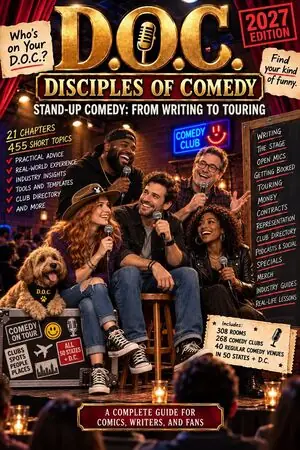
The podcast market in the D.O.C. Book
The book takes the podcast market from the comic’s chair: monetization, the podcast as a business, guesting on other comics’ shows, cross-promotion and owning your audience. It runs to over 1,000 pages and over 450 topics, fully illustrated.
See the book →
More for comics
- The Comedy Podcast Playbook — start a show: record, edit, publish, find listeners, keep it going
- Your free podcast listing — a listing on D.O.C. that sends fans to your own channels
- Comedian income streams — YouTube, podcasts and more, from the D.O.C. book
- Make the Trip Pay — The Twelve, a paid drink with twelve fans, and merch
- Comic’s Corner — the free tools for comics on D.O.C.

Sources for the podcast markets on this page
Each platform fact above comes from that platform’s own page, read on 8 October 2026. Recheck them when plans, fees or eligibility change; each platform’s own help has the last word.
- Spotify for Creators — podcast hosting ↗
- Spotify — Spotify Partner Program: eligibility, ad revenue share, markets, staying active ↗
- Acast — Plans and pricing ↗
- Apple Podcasts for Creators — Submit a new show ↗
- Apple Podcasts for Creators — Subscription launch checklist ↗
- Apple Podcasts for Creators — Availability of Apple Podcasts features, with the program’s annual fees ↗
- Amazon Music for Podcasters ↗
- iHeartRadio Help — Submitting a podcast to iHeartRadio ↗
- Pocket Casts Support — Submitting podcasts ↗
- YouTube Help — Deliver podcasts using an RSS feed ↗
- YouTube Help — Publish or disconnect episodes from an RSS feed on YouTube ↗
- YouTube Help — YouTube Partner Program overview and eligibility ↗
- Patreon Help Center — Creator fees overview (updated 11 September 2026) ↗
- Federal Trade Commission — Disclosures 101 for Social Media Influencers ↗
- SSRS — Edison Podcast Metrics ↗
- SSRS — Five Years of Edison Podcast Metrics, with methodology notes ↗
- Triton Digital — Podcast Rankers ↗
- Podtrac — podcast measurement and rankings ↗
- IAB Tech Lab — Podcast Measurement Technical Guidelines ↗
- Team Coco — Conan O’Brien Needs a Friend ↗
- Off Menu with Ed Gamble and James Acaster ↗
Updated 8 October 2026 · platform facts and show descriptions as of 8 October 2026. Plans, fees and eligibility change, so check the platform’s own help before you sign up.